.svg)
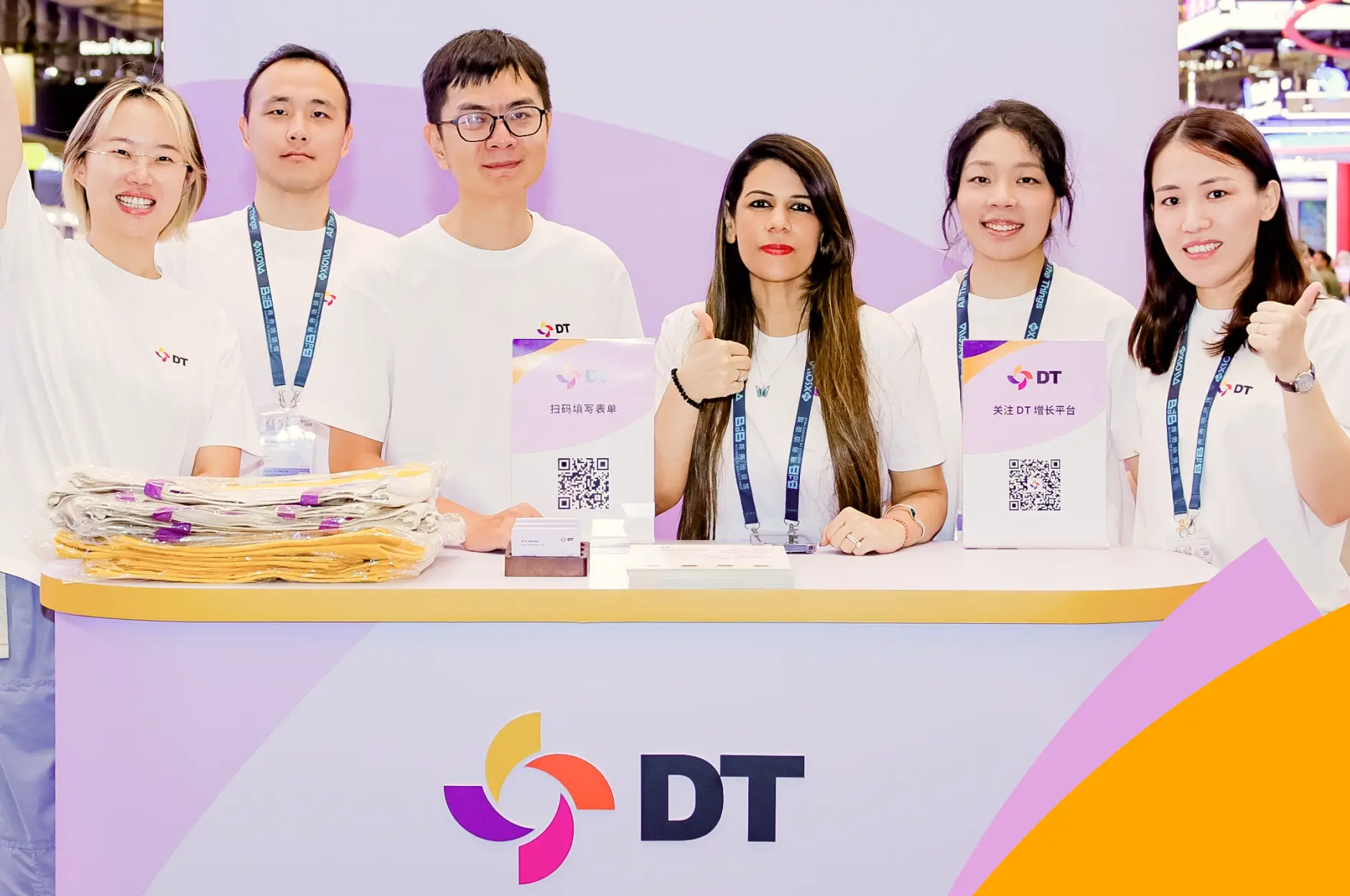
A month has passed since ChinaJoy closed in Shanghai. That's long enough for the noise of a four-day show to settle, and for the conversations that mattered to separate from the ones that didn't.
ChinaJoy started out as a gaming conference. 23 editions later, it reflects a far wider app economy, from AI-powered apps to short-form drama. We had more than 30 DT team members on the ground this year. Once everyone was back and had a chance to reflect, we asked what they were still thinking about. Three themes kept coming up.
Broadening the app growth playbook
For years, app growth has been focused on short-term return on ad spend (ROAS), with developers quick to move on to the next campaign. However, Sea Yen Ong, Regional Vice President of Sales (APAC) at DT, believes publishers are beginning to think more broadly about sustainable, long-term growth — including how they diversify how they reach new users.
“Developers are increasingly moving away from relying purely on ad auctions, instead prioritizing direct-to-device distribution. They want to get their apps in front of users the moment a new phone is activated. When teams look beyond the initial install to full-funnel performance, they’re seeing the value that early-on device placement can drive across longer-term retention and LTV.”
As developers take a broader view of sustainable growth, they’re also looking beyond traditional acquisition channels to reach incremental users and reduce competition — including through original equipment manufacturer (OEM) and carrier ecosystems.
Helen Chen, Director, APAC Business Development at DT, thinks that advertisers are becoming more open-minded about testing new user acquisition (UA) channels to gain share.
“Advertisers are showing a strong appetite for experimenting beyond the usual channels to capture users before their competitors do. Whether it's OEM placements, alternative stores, or emerging programmatic pathways, the mindset is: if it gives me an edge, I'll test it.”
On the subject of OEMs: Eric Wang, VP Regional Sales APAC at DT, saw firsthand how manufacturers are responding to a changing landscape.
“Traditionally focused on distribution, OEMs are picking up the pace of innovation, investing more in recommendation algorithms and personalized experiences.”
It’s clear that relying on a single channel to drive app growth is becoming increasingly difficult. Moving forward, developers will need to leverage AI-driven optimization alongside a more diversified distribution strategy—including OEM and carrier ecosystems—in order to unlock higher-quality outcomes at scale.
The new app discovery frontier
Diversification becomes even more important in an attention economy where developers are competing for users in the same environments. For Ong, this reinforces the case for treating direct-to-device distribution, preloads, and dynamic installs as more than side experiments.
“When an app is dynamically installed on a fresh phone, it's already sitting on the home screen waiting for them — no store search, no ad redirects. It's an effortless entry point. That’s why direct-to-device distribution needs to be a core, always-on part of the strategy. It gives you predictable, clean scale that builds long-term real estate on a user’s phone.”
This advantage extends beyond the home screen. For Chen, the real differentiator is the unique positions OEMs occupy in the mobile ecosystem.
“OEMs showcased how system-level touchpoints — pre-installs during device setup, native store recommendations, system push notifications, and lock screen placements — provide higher-quality traffic than social media or traditional UA channels. These placements benefit from first-party device data, fraud-resistant environments, and genuine intent signals that social platforms cannot replicate.”
But it’s not simply about creating additional routes onto a device. App recommendation has become more nuanced. According to Wang, this creates an opportunity for OEMs and carriers to reposition themselves as discovery platforms.
“App discovery has evolved beyond helping users find apps. Today, distribution is more personalized, contextual, and AI-driven. As recommendation engines improve, OEMs and carriers will evolve into strategic distribution platforms. By combining first-party data with AI recommendations, they can create more intuitive experiences for the right users, at the right moment.“
Winning in the discovery economy
Each day of ChinaJoy reinforced the feeling that the competitive landscape has shifted. The playing field has flattened. As AI makes app development faster and more accessible, more apps are entering the market — and competing for the same user attention.
Ong argues that this creates an opportunity for APAC-based publishers, who now have access to many of the same AI tools, audience insights, and distribution channels as legacy gaming and app giants.
“Getting onto devices globally is more accessible than ever. The barriers to entering new international markets have been considerably lowered. Over the next 12 months, expect to see a wave of nimble, innovative challenger brands from APAC taking on traditional global powerhouses — and winning.”
According to Wang, that’s exactly why discovery is going to become one of the defining battlegrounds of the next era of mobile.
“OEMs and carriers hold a unique advantage in this new landscape, as they have the first-party relationships with users, enabling them to offer more personalized, contextual discovery.”
The key takeaway from ChinaJoy isn’t that one growth channel will replace another. It’s that as competition for attention increases, developers will need a broader mix of ways to reach users — and more relevant, integrated discovery will become an increasingly important part of that mix.
Get in touch today to learn more about how DT helps developers expand app distribution and reach relevant users in the moments that matter.